
Missing these types of accruals won’t just skew your books—it could misinform your runway, investor updates, or tax liabilities. With Accounting Seed, you can leverage financial dashboards and reports to assess expenses, track customer engagements, and make important decisions related to how money is being allocated with ease. At FinOptimal, we recognize the importance of such foundational accounting principles.
- A manufacturer must disclose in its financial statements the amount of finished goods, work-in-process, and raw materials.
- As the event isn’t recurring, it is considered an infrequent/non-routine accrued liability.
- If the revenues come from a secondary activity, they are considered to be nonoperating revenues.
- Accrued expenses are an important part of these categories of business expenses.
- For many successful corporations, the largest amount in the stockholders’ equity section of the balance sheet is retained earnings.
Accounts Payable
- Companies may also issue commercial paper (CP), a short-term, unsecured promissory note that’s used to raise funds.
- Why might consistently high accrued expenses be a concern for a business?
- This means that once the financial year has ended for the company, the company must record all the expenses relevant for the current year.
- The terms which indicate when payment is due for sales made on account (or credit).
Other types of liabilities that may be accrued include salaries and wages, taxes, and bonuses. Accrued liabilities represent expenses that have been incurred but not yet paid. Accruals are also used to account for accrued interest and other liabilities.
How Are Accrued Expenses Accounted for?
The goal is to clear the slate of specific accruals from the previous period, making it easier to record regular transactions. This ensures that the financial reporting is accurate for the new accounting period. This entry increases the Wages Expense account, reflecting the cost incurred in December. It also increases the Accrued Wages Payable account, a liability account, showing the obligation to pay employees in the future.
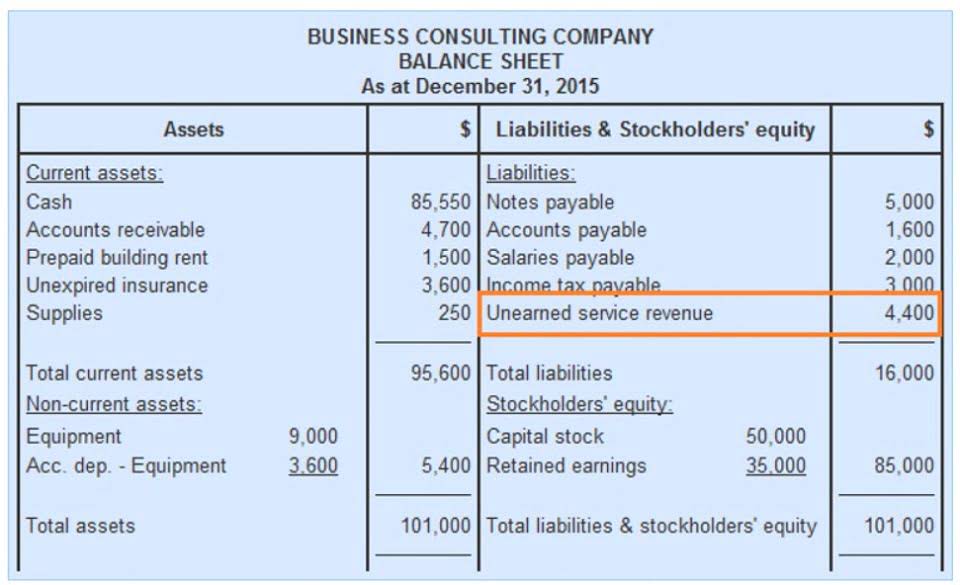
Accrued Expenses vs. Deferred Revenue
- Accrued expenses are also called accrued liabilities because they become a debt you owe, based on receiving a product, service, or operational expense.
- Materiality is a crucial concept in accounting, especially when dealing with accruals.
- By doing so, it offers a clearer picture of a business’s operational performance over time.
- Understanding accrued expenses is crucial for maintaining accurate financial records and presenting a true picture of a company’s financial position.
Therefore, the accrual method of accounting is more commonly used, especially by public companies. International Financial Reporting Standards (IFRS) and Generally Accepted Accounting Principles (GAAP) both require companies to implement the accrual method. https://www.bookstime.com/articles/accrued-expenses HighRadius stands out as an IDC MarketScape Leader for AR Automation Software, serving both large and midsized businesses. The IDC report highlights HighRadius’ integration of machine learning across its AR products, enhancing payment matching, credit management, and cash forecasting capabilities.

Although it is easier to use the cash method of accounting, the accrual method can reveal a company’s financial health more accurately. It allows companies to record their sales and credit purchases in the same reporting period when the transactions occur. Companies using the accrual method of accounting recognize accrued expenses, costs that have not yet been paid for but have already been incurred. Accrued expenses make a set of financial statements more consistent by recording charges in specific periods, though it takes more resources to perform this type of accounting. Understanding the impact of accrued expenses on financial statements allows businesses to present a more accurate financial picture. A thorough approach to expense recognition is essential for maintaining the integrity of financial reporting and supporting long-term business success.
Accrued Expenses and Accurate Financial Reporting
For example, a company owes $2,500 in interest on a short-term loan, payable in the next month. Accrued expenses are recorded as liabilities on the balance sheet and as expenses on the income statement. Common examples of accrued expenses include wages or salaries owed to employees, interest on outstanding loans, and utilities expenses. These limitations highlight the importance of careful estimation, diligent tracking, and ethical management when it comes to dealing with accrued expenses. They also underscore the need for users of financial statements to understand the potential pitfalls and to interpret reported figures with caution.

Though it requires more work to do accrual accounting, recording accrued expenses generally makes financial statements more accurate. An example of an accrued expense is when a company purchases supplies from a vendor and has not yet received an invoice or paid for the purchase. Other examples include employee wages, commissions, and bonuses, also known as accrued compensation. These fixed assets costs accrue in the period they occur even though the actual payment is made in the following period. Interest on a small business loan or taxes can also be considered accrued expenses.
4.4.1 Presentation and disclosure – exit or disposal obligations
By understanding and accurately recording these expenses, companies ensure they are providing a fair and accurate picture of their financial health. In accrual real estate cash flow accounting, expenses are recognized when they are incurred, not when the cash is paid. The accrual method allows businesses to match expenses to the revenues they help generate and create a more realistic picture of financial health.
]]>
They are not bound by insurance company appraisals or any other regime for calculating salvage value. As with most businesses, supply and demand of salvage title vehicles govern their decision-making. AutoInsurance.com is an insurance provider matching service and not an insurance broker or insurance company. Make sure to compare carrier rates and fees as they can vary between insurance companies and will depend upon the state in which you reside. Additionally, any savings you receive will depend upon your driving history and other factors as real estate cash flow determined by the insurance companies giving you quotes. None of the insurance companies with whom you may be matched through the site sponsor, endorse, or are in any way affiliated with AutoInsurance.com or this site.

How to Calculate Accurate Salvage Car Prices

After getting the current market value, multiply it by the percentage used by your insurance company. You can get information from KBB.com as to how much a second hand unearned revenue vehicle will cost as well as its trade-in value. Therefore, combining both estimates and dividing the number into two will give you a marginal and fair value to salvage the vehicle. If you’re buying the vehicle to acquire parts for repair, the car salvage price may be justified by the value of its components. If you’re looking at rebuilt title cars for personal use, consider the cost of repairs and safety inspections before you dive into a purchase.
Salvage Value Calculator

The exterior, including doors, bumpers, hood, etc., has the same parts and are properly attached, as when it was assembled in the factory or has aftermarket replacements. This is where the vehicle is located as we need to locate buyers in the area. Since technology is not going anywhere and does more good than harm, adapting is the best course of action. We plan to cover the PreK-12 and Higher Education EdTech sectors and provide our readers with the latest news and opinion on the subject. From time to time, I will invite other voices to weigh in on important issues in EdTech.
Calculating the Car Scrap Value
This isn’t just the purchase price—don’t forget to include things like installation costs as well. Residual value is what you expect to get back when you’re ready to sell or dispose of something—whether it’s a piece of equipment, a vehicle, or a building. The idea is rooted in the understanding that assets lose value over time because of wear and tear, technological obsolescence, or market saturation. Residual value is the estimated worth of an asset at the end of its useful life or lease term.

How to Source Replacement Salvage Car Parts for Cheap
- You could either decide to get rid of the car and sell its spare parts, or you could attempt to get a little more money.
- Insurers deduct salvage value from their vehicle total loss calculator to determine the amount they can recover by selling the damaged vehicle.
- Toyota, Honda, and Subaru typically retain 40-45% of pre-accident value compared to the average of 30%.
- While the most important concern in any collision is the safety of all the involved parties, you’re bound to be concerned about your damaged car.
- While there are risks to buying a salvage title vehicle, there are also some benefits.
An insurance company appraisal is a crucial step in determining the value of a salvage car. When a car is deemed a total loss calculate salvage value car by the insurance company, they will send out an appraiser to evaluate the vehicle’s condition and calculate its worth. The appraiser will consider factors such as the car’s age, mileage, pre-accident condition, and any additional damages.
- Starting from the original cost of purchase, we must deduct the product of the annual depreciation expense and the number of years.
- The good news is that the salvage price of your car may be much higher than local scrap vehicle prices, or what an insurance adjuster values your totaled car at.
- Briefly, suppose we’re currently attempting to determine the salvage value of a car, which was purchased four years ago for $100,000.
- It is a concept that affects not only vehicles but also buildings, machines and crops.
- You can, however, find out the wholesale value of the vehicle by browsing through resources like Kelley Blue Book and National Automobile Dealers Association Used Car Guide.
- In cases of owner or salvage retention, the amount of the check that the insurance company will give you would likely be different from the amount they give you if they keep the vehicle.

Deciding whether to apply for 501(c)(3) or 501(c)(4) status depends on the mission of your organization and its related activities. For example, if you need to participate in political activities or lobbying, it is best to apply for 501(c)(4) status. However, if you wish to attract donors by allowing their donations to be tax deductible, it is best to apply for 501(c)(3) status. So, look at the pros and cons of each to determine which best meets organizational needs.
How to Create a 501(c)( Organization
A collection of links to State government web sites with useful information for exempt organizations. A publication describing, in question and answer format, the federal tax rules that apply to group rulings of exemption under Internal Revenue Code section 501. Organizations in accounting services for nonprofit organizations pursuit of philanthropic, nonprofit, or civic activities can qualify as tax-exempt as part of section 501(c)(3) of the U.S. Use the core concepts above to review your organization’s purpose, mission statement, and goals. For example, charitable organizations must exist for one of the reasons listed above. He is registered with the IRS as an Enrolled Agent and specializes in 501(c)(3) and other tax exemption issues.
Private Foundation
The National Red Cross and Red Crescent Societies include the American Red Cross. They aim to relieve human suffering globally by empowering subordinate organizations to operate within their nation’s borders to provide disaster relief, education, and other related services. The concept of charity under these regulations has continued to evolve and expand over time.
Charitable contributions
Organizations should be prepared to provide clarification or extra details promptly. Finally, a significant aspect involves record-keeping and annual reporting. This transparency ensures that all funds advance the organization’s mission. Regardless of the form you choose, https://nerdbot.com/2025/06/10/the-key-benefits-of-accounting-services-for-nonprofit-organizations/ you’ll need to submit supporting documentation—such as your mission statement, projected budget, and operational plan—along with an IRS filing fee.

Legal and Tax Implications
- The groups that qualify for the amateur sports purpose are those that foster serious competition on a larger scale, at least at the regional level.
- By exempting them from taxes, the government believed that these organizations would be more inclined to grow and help others.
- However, political campaign intervention for or against any particular candidate is prohibited as a primary activity.
- An example is a sports club, whose purpose is its members’ enjoyment.4 The names used and precise regulations vary from one jurisdiction to another.
- Nonprofit organizations are typically tax-exempt entities that operate to better the community.
It is one of the 29 types of 501(c) nonprofit organizations1 in the US. The 501(c)(3) status offers myriad benefits to the designated organizations and the people they serve. These organizations are exempt from paying federal income and unemployment taxes and patrons who donate to them are allowed to claim a tax deduction for their contributions.
- Public charities that earn less than $5,000 in revenue per year are exempt from filing this form.
- A private foundation is established to support other charitable organizations, rather than to engage in direct charitable operations.
- Donations to public charities can be tax-deductible to the individual donor up to 60% of the donor’s income, although other tax and income circumstances can affect the deductibility of contributions to public charities.
- Kickstart your business in minutes with LegalZoom’s business formation services.